

The Maldives is consistently listed among the world’s top ten diving destinations and it’s easy to see why. With almost 1,200 islands scattered across the Indian Ocean, the country is almost entirely surrounded by water and boasts truly spectacular marine life.
When most people think of visiting the Maldives, luxury resorts immediately come to mind and many overlook the capital city of Malé. Yet within this small, bustling concrete jungle lies a remarkable dive site known by several names: Tiger Port, Shark Point, or, as I prefer to call it, Shark Tank.
A Unique Shark Diving Experience
Shark Tank is an exceptionally unusual dive site where it is possible to encounter up to five species of large shark on a single dive: tiger sharks, bull sharks, lemon sharks, spinner sharks and even hammerheads. How often can you say that?
The site is located very close to the airport; you can even watch planes taking off as you head out by boat. Most dive centres depart from Hulhumalé, as it takes less than ten minutes to reach the site, giving you just enough time to kit up and prepare. Before entering the water, you’ll receive a thorough safety briefing and be assigned a guide. Given the nature of the site and the presence of large sharks, groups are deliberately kept small.
If you’re bringing a camera, a wide-angle lens is highly recommended. Visibility can sometimes be limited, and many of the best encounters happen at close range, making wide-angle setups ideal for capturing both sharks and rays.
Descending into Shark Tank
Divers typically descend either along a sloping reef or via a mooring line. Visibility here can be quite unpredictable and isn’t always what people expect from the Maldives. On some days it can be as low as 5 metres, while on others it opens up to 20–25 metres. Visibility is often poorer near the reef but improves as you descend to around 30 metres.
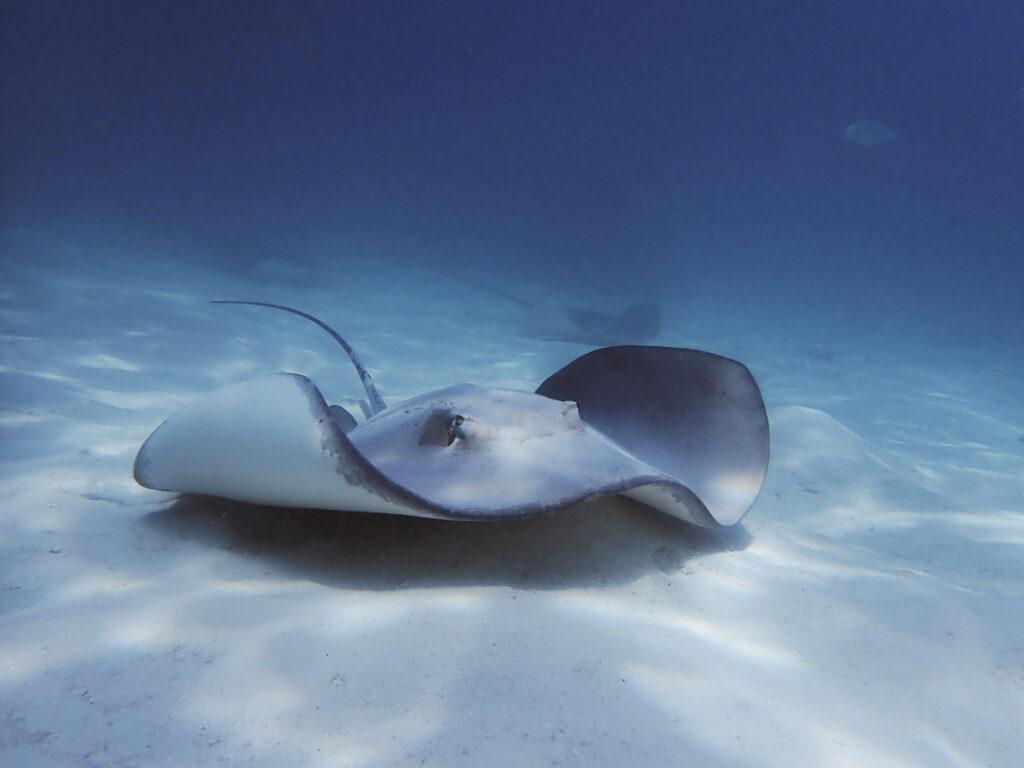
One of the first things you’ll notice is the sheer number of stingrays. There are many, representing several different species. You have a good chance of seeing Jenkins’ whiprays, pink whiprays, marbled rays, whitetail rays and occasionally eagle rays. These rays are very comfortable around divers and will often glide directly overhead, which in itself makes for a fantastic experience.
Meeting the Sharks
At around 30 metres, there is a small pinnacle where guides tend to gather, and this is where the sharks are most commonly seen. Spinner sharks are often the first to appear, as they are more numerous. Bull sharks and lemon sharks typically cruise closer to the seabed, while the larger tiger sharks patrol the mid-water. Several individual sharks are known to frequent the area, varying in size and appearance, which adds to the site’s character.
As this is a popular local dive site, you may hear guides tapping their tanks to draw attention, usually signalling the presence of a tiger shark or, if you’re lucky enough, a great hammerhead. The latter is a species many divers dream of encountering, although it’s important to remember that sightings are never guaranteed.
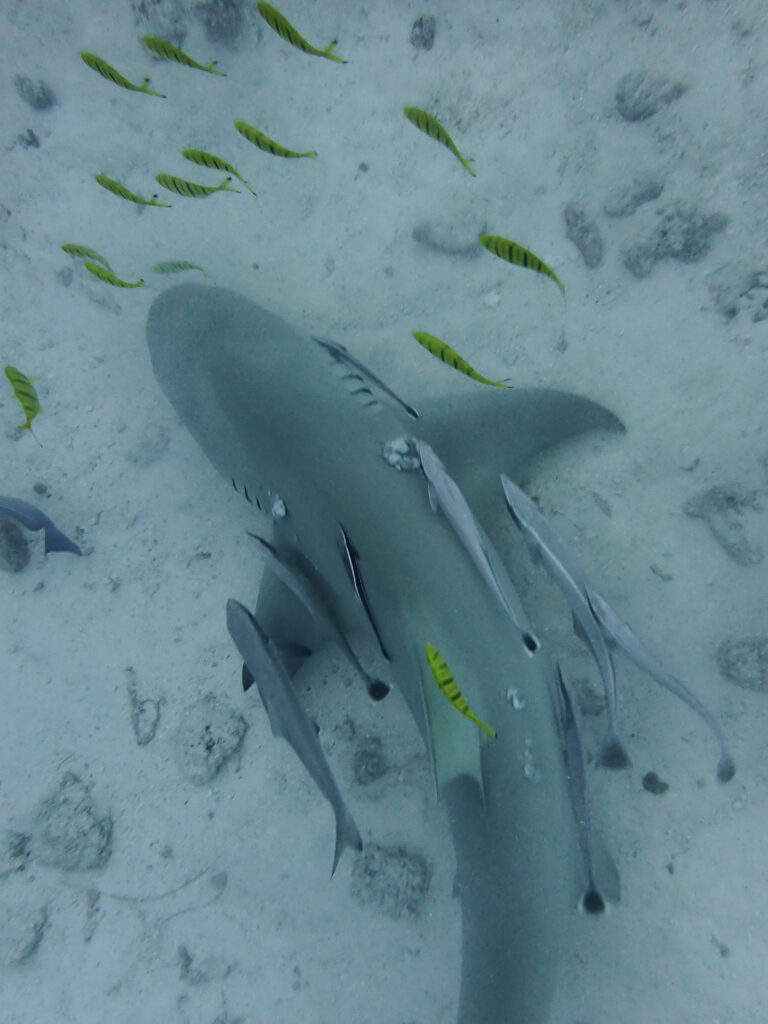
What sets this site apart from the world-famous Fuvahmulah is that, depending on your experience level, you may be able to free-swim with the sharks rather than remaining stationary on the seabed. This creates a more dynamic encounter and offers a greater sense of freedom.
More Than Just Sharks
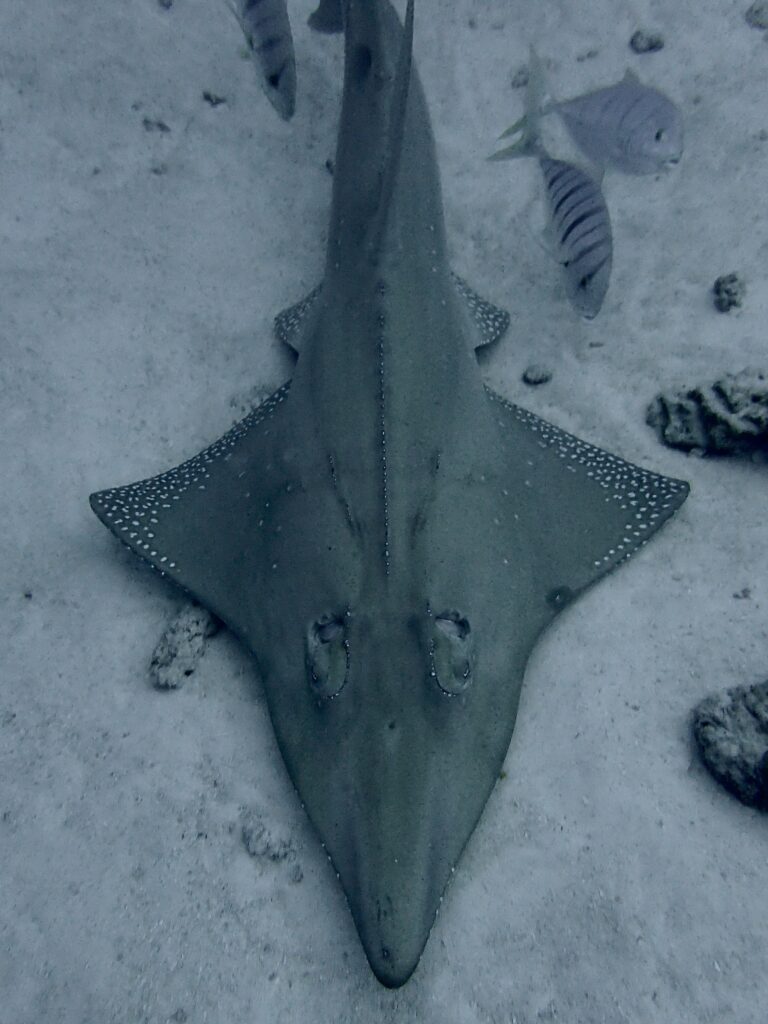
One point worth mentioning is the presence of guitarfish. Some dive centres claim you may see up to six species of shark here, but it’s important to note that guitarfish are not actually sharks. Despite sometimes being referred to as “guitar sharks”, they are in fact a type of ray.
I have been fortunate enough to see the great guitarfish here on several occasions, so there is a good chance of spotting this strange-looking creature during your dive.
Why So Much Marine Life?
You might be wondering why such a wide variety of marine megafauna gathers in this particular spot. Close to the dive site is a pier where fishermen historically cleaned their catch, releasing fish waste into the water. This scent attracted sharks and other large marine animals. Over time, as locals recognised the consistent presence of these species, the area developed into a managed dive site complete with mooring lines and controlled access, creating a hidden gem right on the doorstep of the capital.
Who Can Dive Here?
You will need to be an advanced diver to fully experience this site, as the main viewing area sits at around 30 metres. On a couple of occasions I have seen tiger sharks at 10 metres, but this is relatively uncommon.
I would also recommend visiting Shark Tank only after gaining some prior experience with large shark dives. The guides provide an in-depth briefing and will explain how to redirect a shark should one come too close, although they strongly advise against touching the animals unless absolutely necessary.
That said, I have dived here many times and have never felt the need to redirect a shark. They do come close on occasion, but I have never felt threatened by them. Instead, it provides an opportunity to truly appreciate these magnificent apex predators.
Final Thoughts
Shark Tank is a genuinely special dive site. The guides are excellent, the encounters are unforgettable and few places offer the chance to get so close to such a variety of large sharks in a single dive.
I have been fortunate enough to dive here numerous times, both for work and for pleasure and every visit has been memorable. If you’re looking for an exciting shark dive while staying in Malé, I cannot recommend Shark Tank highly enough.
Shark Tank
SCUBA Level: Advanced
Temperature: 27-29°C/81-84°F
Visability: 5-20+ m/16-60ft
Depth: 5-30 m/16-100ft
What to Watch Out For
As well as the great guitarfish, there is another fascinating visitor that occasionally appears at the site: the bowmouth guitarfish. Sightings are relatively uncommon and I have yet to see one myself, so it remains firmly on my diving wish list.
When they do appear, however, they often remain in the area for several days before disappearing again for months at a time. If you’re lucky enough to encounter one, it will almost certainly be one of the highlights of your dive.